 Minesweeper100
Minesweeper History
Minesweeper first came out on October 8, 1990, in the Microsoft Entertainment Pack for Windows 3.0. Two Microsoft programmers wrote it: Curt Johnson made the first version for OS/2 in 1989, and Robert Donner rewrote it for Windows in 1990. It was built into Windows from Windows 3.1 in 1992 to Windows 7.2, 3, 4
This history runs from the mine games of the 1970s to the Microsoft Store app, with a source for every date and name. For rules and strategy, see How to Play Minesweeper and Minesweeper tips.
Contents
At a glance
| First release | October 8, 1990, in Microsoft Entertainment Pack for Windows (later called Pack 1) |
|---|---|
| Made by | Curt Johnson and Robert Donner, programmers at Microsoft |
| Earlier version | PM Mine for OS/2, written by Johnson in 1989 |
| Built into Windows | Windows 3.1 (1992) to Windows 7 (2009) |
| Since Windows 8 (2012) | A separate app in the Microsoft Store, rebuilt by Arkadium |
| Age | 36 years, counting from October 8, 1990 |
Mine games before Minesweeper
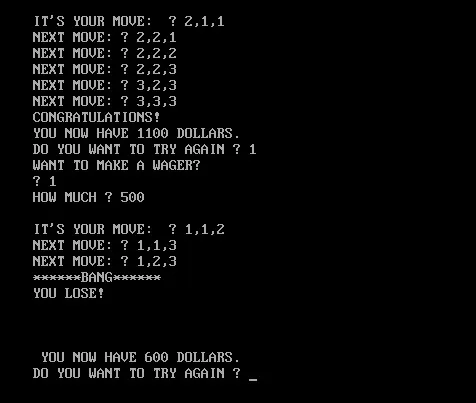
Hidden mines on a grid are older than Windows. In 1973 Jerimac Ratliff wrote Cube, a BASIC game where you walk from one corner of a 3 × 3 × 3 cube to the other without stepping on one of five hidden mines. It was printed in the book 101 BASIC Computer Games that year, and it gave the player no clues at all.8, 9
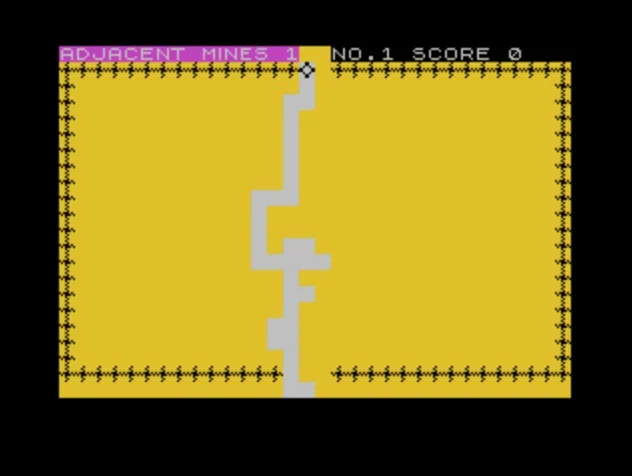
Number clues came in the 1980s. In Ian Andrew's Mined-Out, published by Quicksilva for the ZX Spectrum in 1983, a detector tells you how many mines sit next to the square you are standing on, and you have to reach the top of the screen alive.10 In November 1987 Tom Anderson posted Mines to Usenet after watching a colleague play an MS-DOS game called Relentless Logic. Mines let players mark the squares they thought were mines and the ones they thought were safe.11 In all of these games, you won by getting across the field.
Who made Minesweeper
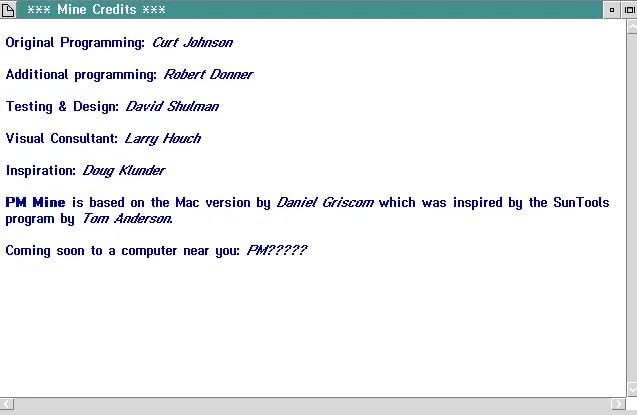
Curt Johnson joined Microsoft in 1989 to maintain a debugger for OS/2. To teach himself Presentation Manager, the graphical side of OS/2, he wrote a mine game called PM Mine. Its credits say it was "based on the Mac version by Daniel Griscom which was inspired by the SunTools program by Tom Anderson", so the line runs back to Anderson's Mines.3, 5 Johnson told Eurogamer in 2014 that it was his second program, because he first had to build a tool for the pictures:
"I had to write a 16 colour bitmap editor to develop the assets used in the program. Microsoft Paint, in those days, used black and white."1
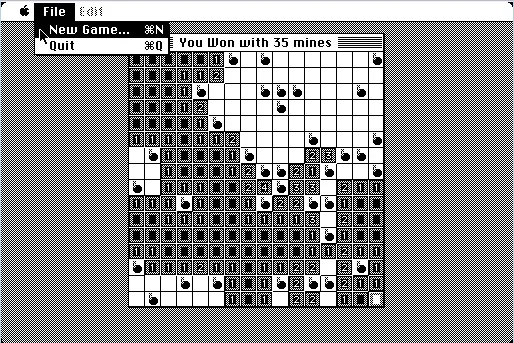
The Mac game wanted you to cross from one corner to the other. Johnson played it his own way, and that became the rule Minesweeper still uses:
"When I played the game, I would solve as much as I could before I'd step into that corner. So I set it up in Minesweeper so that you'd have to step in all the squares that were unoccupied and didn't care if you'd marked the ones that were."1
Robert Donner joined Microsoft in May 1989 to work on Word for Windows 1.0. He updated PM Mine in May 1990. Windows 3.0 came out on May 22, 1990, and Donner rewrote the game for it as Win Mine, crediting Johnson for the original programming. The two put their spare-time games out under a joke label, Duff Software.4
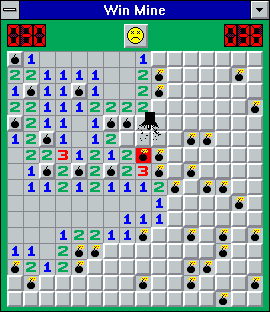
Ian Andrew, the author of Mined-Out, told Eurogamer he "absolutely thought" Minesweeper was based on his idea. Johnson said the game he borrowed from was the Macintosh one.1 Johnson died in December 2014.3
October 8, 1990: the Entertainment Pack
Windows 3.0 had few games, so Microsoft asked its employees to send in theirs. Donner sent Win Mine and a tic-tac-toe game. Microsoft's lawyers renamed them Minesweeper and TicTactics, and both shipped in the Microsoft Entertainment Pack for Windows on October 8, 1990. The pack cost $39.95 and also held Tetris, Taipei, Cruel, Golf, Pegged and the IdleWild screen saver. Three more packs followed by 1992, and the first one was renamed Pack 1.2
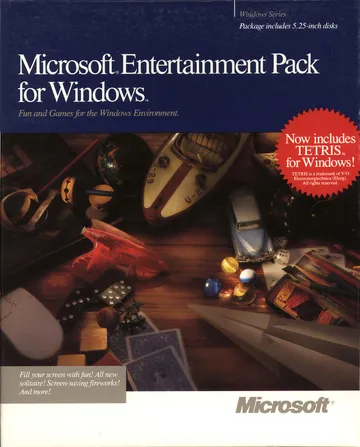
In August 1991, COMPUTE! magazine called Minesweeper "the most diabolically addictive game I've seen lately" and said it was "worth the entire price of WEP".14 It spread inside Microsoft as well. Bruce Ryan, who managed the pack, told Business Insider that Bill Gates used to sneak into a colleague's office after work to play it, and Eurogamer reported that Gates held the Beginner high score for a while.15, 1
Part of Windows, 1992 to 2009
Windows 3.1, released to manufacturers on April 6, 1992, put Minesweeper in the standard install, where it replaced Reversi. Every Windows release after that kept it until Windows 8.23, 21
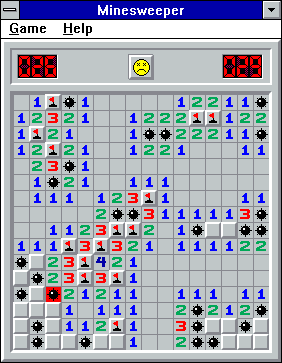
The classic game had three fixed boards and a Custom option:
| Level | Board | Mines |
|---|---|---|
| Beginner | 8 × 8 (9 × 9 from Windows 2000) | 10 |
| Intermediate | 16 × 16 | 40 |
| Expert | 30 × 16 | 99 |
| Custom | up to 30 × 24 | your choice |
Windows 2000 made Beginner 9 × 9. It also moved the best times from a text file that anyone could edit into the Windows Registry, and it fixed two old bugs: the window crept up the screen each time you changed level, and the first second on the timer was shorter than a second.6
The classic game also protected your first click. If it landed on a mine, the game moved that mine to the first empty square in the top row, counting from the left, so you could not lose on the first move.13
Donner left a cheat in it, too. Typing xyzzy and then pressing Shift+Enter turned the top-left pixel of the screen into a mine detector: white over a safe square, black over a mine. The word comes from Colossal Cave Adventure, a 1976 game that Donner said was one of the first computer games he played. The cheat works in the Entertainment Pack, Windows 3.1, 2000 and XP versions. Windows 95, 98 and ME left it out.12
Windows Vista (2007) replaced the original code with a new version written by Oberon Media. The rules stayed the same, but the graphics and sounds were new, the smiley face button was gone, and Expert was renamed Advanced. You could now save a game, replay a board you had lost and see your win rate. Vista also made the first click always open an empty area.6, 13 Windows 7 (2009) included the game too, and it stayed in Windows until 2012.6
Mines or flowers
Some people objected to a game about land mines. A group calling itself the International Campaign to Ban Winmine asked Microsoft to change the theme, and the Italian version of Windows 2000 renamed the game Prato fiorito ("field of flowers") and showed flowers instead of mines.1, 6
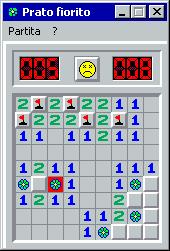
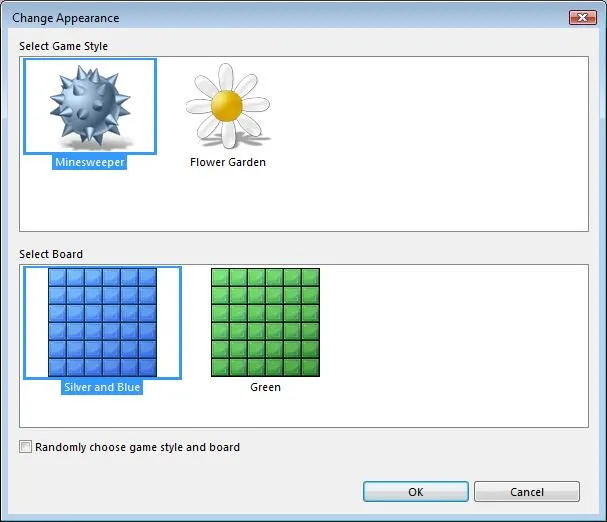
For Vista, Microsoft added a second style called Flower Garden. Dave Vronay, Research Manager for the Windows User Experience Compliance group, explained the reason in 2006:
"For those of us living in North America, land mines are an abstract entity that you really only see in a movie, but in many parts of the world people are killed or maimed by mines on a daily basis. Over the years, these users have repeatedly asked us to either remove minesweeper or change the concept from landmines to something a little less obnoxious."16
Vista chose the default by region: mines in North America, flowers in countries where land mines are a real danger.16, 21 When Eurogamer told Johnson about the Italian version in 2014, he said he would not call a new game Minesweeper today, "for the reason they described". As for the Italian name: "Field of flowers, though? It's a fine name."1
Windows 8 and the Microsoft Store
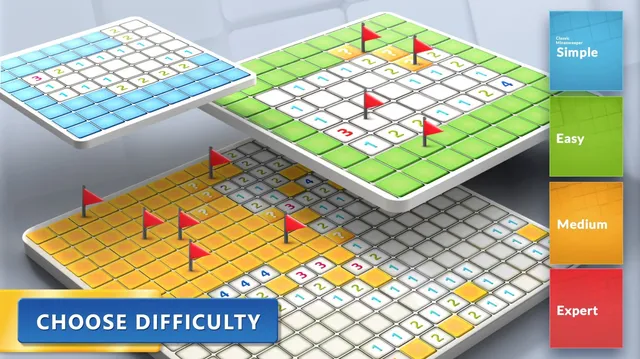
Windows 8, released in October 2012, was the first Windows since 3.1 without Minesweeper. Microsoft published a new version as an app instead, built by Arkadium: free with ads, with an Adventure mode, online challenges and leaderboards, on Windows, Windows Phone and Xbox. The app was rewritten in Unity in 2022 and later gained an automatic chording option and a Retro theme.7 In November 2026 the Microsoft Store lists it as Microsoft Minesweeper, published by Xbox Game Studios.20
Mathematicians and record chasers
In 2000 the mathematician Sadie Kaye (credited on the paper as Richard Kaye) published "Minesweeper is NP-complete" in The Mathematical Intelligencer.18, 22 The paper shows that deciding whether a partly opened board has any mine layout that fits all its numbers belongs with the hardest problems in the class NP. In practice, no one knows a fast method that works on every board.
Players turned the Windows game into a speed sport. Damien Moore, who runs the Authoritative Minesweeper rankings, told Eurogamer that in 2000 the top player at the time noticed two of the best players had submitted the same board. The Windows game repeated its Beginner and Intermediate boards in cycles, so players could learn them by heart, and the original game was banned from the rankings. Ranked play moved to clones such as Minesweeper X, Arbiter and Viennasweeper, and speed came to be compared with 3BV/s: the number of clicks a board needs, divided by the time taken.1 See Minesweeper efficiency for how 3BV works and Minesweeper world records for the fastest times.
The game has its own book, too. Kyle Orland, a senior gaming editor at Ars Technica, wrote Minesweeper for Boss Fight Books, and he discussed it with the Video Game History Foundation in 2023.19
Timeline
| Date | Event |
|---|---|
| 1973 | Jerimac Ratliff writes Cube, a hidden-mine game with no clues |
| 1983 | Ian Andrew's Mined-Out for the ZX Spectrum adds a count of nearby mines |
| Nov. 1987 | Tom Anderson posts Mines to Usenet |
| 1989 | Curt Johnson writes PM Mine for OS/2 |
| May 1990 | Robert Donner rewrites it for Windows 3.0 as Win Mine |
| Oct. 8, 1990 | Minesweeper ships in the Microsoft Entertainment Pack |
| Apr. 1992 | Windows 3.1 includes Minesweeper in place of Reversi |
| 2000 | Windows 2000 makes Beginner 9 × 9; Kaye proves Minesweeper is NP-complete |
| 2007 | Windows Vista brings Oberon Media's rewrite and the Flower Garden style |
| 2009 | Windows 7 still includes the game |
| 2012 | Windows 8 drops it; Arkadium's version goes to the Microsoft Store |
| 2022 | The Store app is rebuilt in Unity |
Playing Minesweeper today
36 years after the Entertainment Pack, the game is still easy to find. Pick by what you want from it:
| If you want | Play |
|---|---|
| The official game from Microsoft | Microsoft Minesweeper, free with ads in the Microsoft Store20 |
| Times that count in the world rankings | Minesweeper Arbiter or Viennasweeper, two of the clones ranked play moved to1 |
| Windows-style boards in a browser | Minesweeper100 Classic |
| Boards you can always solve by logic | Minesweeper100 No Guess |
Minesweeper100 is an unofficial browser version of the game. It is not affiliated with or endorsed by Microsoft. Its Classic levels use the boards from the table above: Beginner at 9 × 9 with 10 mines, the size Windows 2000 settled on, Intermediate at 16 × 16 with 40, and Expert at 30 × 16 with 99. As in the Vista version, your first click always opens an empty area.
Ian Andrew's complaint about Minesweeper was that "you didn't need to take random chances in Mined-Out like you do have to with Minesweeper".1 The No Guess mode only deals boards you can finish by logic. For why the classic game sometimes forces a guess, see Minesweeper guessing.
Questions
When did Minesweeper come out?
Minesweeper came out on October 8, 1990, in the Microsoft Entertainment Pack for Windows 3.0. It became part of Windows itself with Windows 3.1 in April 1992. The OS/2 game it grew from, PM Mine, was written in 1989.
Who invented Minesweeper?
Microsoft programmers Curt Johnson and Robert Donner made it. Johnson wrote PM Mine for OS/2 in 1989, based on a Macintosh game called Mine by Daniel Griscom, and Donner rewrote it for Windows 3.0 in 1990. Hidden-mine games such as Cube (1973) and Mined-Out (1983) came earlier.
How old is Minesweeper?
Minesweeper turned 36 on October 8, 2026, counting from its first release in the Microsoft Entertainment Pack. PM Mine, the OS/2 version it was rewritten from, dates from 1989.
What was the first Minesweeper game?
No single game can claim it. Cube (1973) hid mines without clues, and Mined-Out (1983) showed how many mines were next to you. Microsoft's Minesweeper (1990) made clearing every safe square the goal, and it is the game most people mean by the original.
Is Minesweeper still part of Windows?
Not as a built-in game. Windows 7 (2009) still included it, and Windows 8 in 2012 dropped it. Since then, Microsoft Minesweeper has been a separate, ad-supported app in the Microsoft Store.
Was Minesweeper made to teach people to use a mouse?
The claim is common: TechRadar wrote in 2009 that it was partly meant to teach mouse controls. The authors described a game they wrote in their spare time, and Microsoft's games manager in 1994 said it went into the pack because it was everyone's favorite.
How we checked the facts
We read every source listed below on November 17, 2026. Where we could, we used accounts from the people involved: the interviews with Johnson and Andrew, the credits inside PM Mine, and the 1991 COMPUTE! review. Later summaries only filled gaps.
The sources disagree in three places:
- Eurogamer says the game came with Windows 3.11. Windows 3.11 came out in November 1993, after Windows 3.1 had already shipped the game in 1992, so this page says Windows 3.1.1, 23
- Wikipedia's list of Entertainment Pack games credits Minesweeper to a David Bauer, with no source. The game's own credits and both authors name Johnson and Donner, so we left that name out.24, 5
- Two Wikipedia articles give different years for the International Campaign to Ban Winmine, 1999 and 2001, so this page gives none.21, 22
We could not read two sources first-hand. The 1994 Washington Post interview behind the FAQ answer about Microsoft's games manager is quoted from Authoritative Minesweeper.2 The 2006 Ars Technica article blocked automated access, so we read the copy in the Internet Archive.16
Page history: first published November 17, 2026. If you find a mistake, write to contact@play100.io with the name of this page; corrections will be listed here.
Sources
- Dan Griliopoulos, "Every step you take: The story of Minesweeper", Eurogamer, July 20, 2014 (interviews with Curt Johnson, Ian Andrew and Damien Moore)
- Damien Moore, "Windows Entertainment Pack", Authoritative Minesweeper (minesweepergame.com), 2020
- Damien Moore, "Curt Johnson", Authoritative Minesweeper, 2021
- Damien Moore, "Robert Donner", Authoritative Minesweeper, 2021
- "PM Mine (1989)", Minesweeper Game Database (includes the PM Mine 2.01 credits window)
- "Windows Minesweeper (1990)", Minesweeper Game Database
- "Microsoft Minesweeper (2012)", Minesweeper Game Database
- "Cube (1973)", Minesweeper Game Database
- Cube program and instructions from BASIC Computer Games (1978), coding-horror/basic-computer-games on GitHub
- "Mined-Out (1983)", Minesweeper Game Database
- "Mines (1987)", Minesweeper Game Database
- Damien Moore, "XYZZY", Authoritative Minesweeper, 2021
- "First Click", Authoritative Minesweeper
- "Great Games that Come Cheap", COMPUTE! issue 132, August 1991, p. 98
- Matt Weinberger, "Bill Gates was so addicted to Minesweeper, he used to sneak into a colleague's office after work to play", Business Insider, August 2015
- "Fun, games, and geopolitics: updating Minesweeper for Vista", Ars Technica, October 2006 (quotes Dave Vronay of Microsoft)
- Richard Cobbett, "The most successful game ever: a history of Minesweeper", TechRadar, May 5, 2009
- Kaye, "Minesweeper is NP-complete", The Mathematical Intelligencer 22 (2), 2000
- "Ep. 110: Minesweeper" with Kyle Orland, Video Game History Foundation, May 24, 2023
- "Microsoft Minesweeper", Microsoft Store listing (checked November 17, 2026)
- "Microsoft Minesweeper", Wikipedia
- "Minesweeper (video game)", Wikipedia
- "Windows 3.1", Wikipedia
- "Microsoft Entertainment Pack", Wikipedia